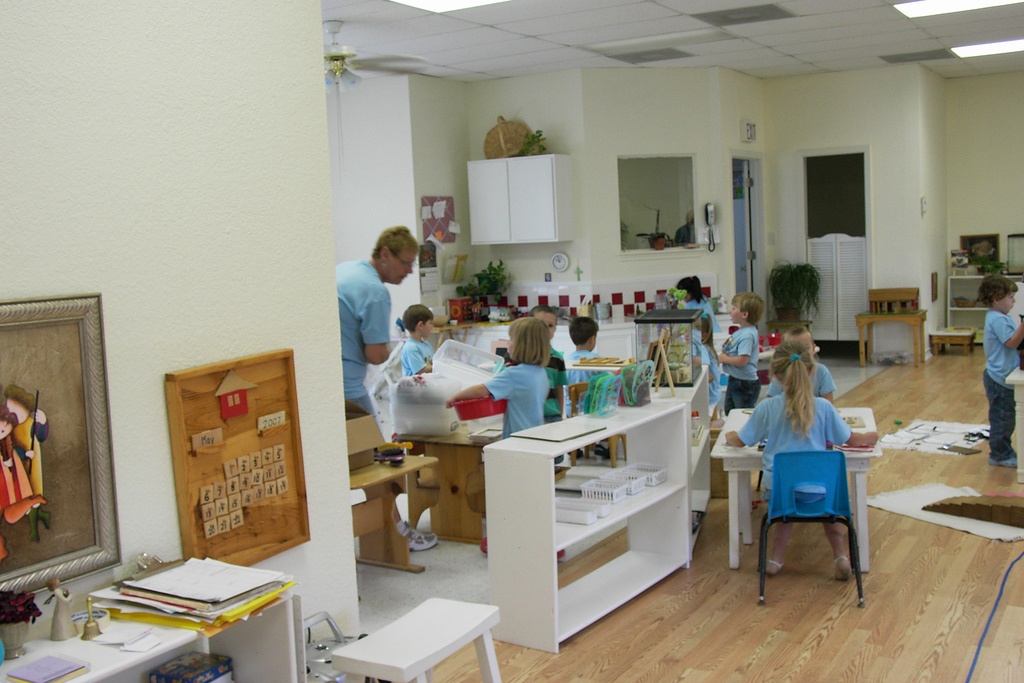
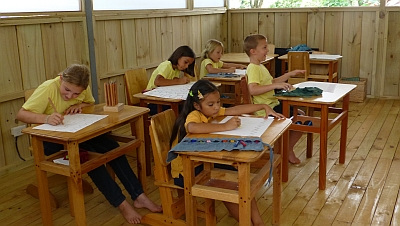
Project-based learning — PBL in the shorthand used by Romanian educators who work with it — is not a single curriculum framework. It is a family of instructional designs that share a common architecture: students investigate an open, real-world question over an extended period, produce a concrete outcome, and present or share it with an audience outside their immediate class group. The driving question and the public audience are the two features most consistently documented across PBL implementations, regardless of school type.
In Romania, PBL has entered alternative classrooms through two main channels: the Step by Step network, which introduced child-centred and project-oriented approaches in the mid-1990s, and independent democratic schools that have emerged in the last decade, several of which operate entirely without a traditional subject-timetable structure. This article documents what PBL looks like inside those environments and what distinguishes a structured PBL unit from the looser "project work" found in many standard Romanian classrooms.
The Step by Step Network and its Role
The Step by Step educational approach arrived in Romania in 1994, supported by the Children's Resources International and later the Open Society Foundation. By the early 2000s, hundreds of kindergartens and primary classes across the country had incorporated Step by Step methods, including learning centres, heterogeneous small-group work, and portfolio assessment. Within this framework, project work appeared as multi-day or multi-week investigations that children led with teacher facilitation.
The Step by Step model differs from formal PBL in its looser driving-question structure — projects often begin from child interest rather than a pre-designed inquiry arc — but it established a documented culture of extended, child-initiated investigation in Romanian classrooms that made the transition to more structured PBL frameworks easier for teachers who encountered them later.
Democratic Schools and Full PBL Integration
A smaller, more recent cluster of Romanian alternative schools has gone further than Step by Step adaptations by building their entire educational model around project-based units. Several independent schools registered as associations, operating in Bucharest and Cluj-Napoca, use PBL as the primary organiser for curriculum coverage. Students in these environments may spend a full month on a single interdisciplinary project that generates evidence of competencies across multiple national curriculum areas simultaneously.
These schools operate under the "homeschooling with school affiliation" clause in Romanian education law, which allows children to be registered at a state school for examination purposes while receiving their day-to-day education elsewhere. The arrangement is legally documented and used by a small but growing number of families who have found that alternative school associations better match their educational preferences.
Anatomy of a PBL Unit in the Romanian Alternative Context
Classroom documentation from several Romanian alternative schools describes a consistent unit structure, aligned broadly with the Buck Institute for Education's Gold Standard PBL framework, adapted to local conditions:
1. The Driving Question
The unit opens with a question that is open-ended, relevant to the age group, and anchored in a real context. Examples documented in Romanian alternative school materials include: "How does the Danube Delta change from season to season, and what do those changes tell us?" and "What would our neighbourhood look like if it were designed for twelve-year-olds?" Both questions require sustained inquiry and cannot be answered with a single internet search.
2. Investigation and Sustained Inquiry
Students gather information through primary and secondary research. In the Romanian context, this has included correspondence with local scientists, visits to municipal archives, interviews with elderly residents, and analysis of statistical data published by the National Institute of Statistics. Teachers document the inquiry process through photographs, student journals, and recorded discussions.
3. Voice and Choice
Students make decisions about how their project develops — which aspects to investigate, how to represent their findings, and who to involve. This element is explicitly documented in teacher planning frameworks published by Romanian alternative school networks as a distinguishing feature of genuine PBL versus teacher-directed project work.
4. Critique and Revision
Drafts of student work are reviewed by peers, by teachers, and sometimes by external experts. The documented "critique protocol" used in several Romanian PBL classrooms is adapted from the model developed by Ron Berger at EL Education: students offer "warm" observations (what is working) and "cool" questions (what is unclear or incomplete) before the work is revised.
5. Public Product and Audience
The unit concludes with a presentation, exhibition, publication, or demonstration directed at a real audience — parents, local officials, community members, or subject-matter specialists. This public accountability structure is consistently described in Romanian alternative school documentation as the element that most clearly distinguishes PBL from conventional project assignments.
Assessment Without Grades: Portfolio Documentation
Several Romanian alternative schools that use PBL as their primary organisational frame have moved away from numerical or letter grades in favour of portfolio-based assessment. Student portfolios collect work samples, reflection notes, teacher observations, and peer feedback across the project arc. These portfolios are then reviewed against national curriculum competency descriptors to generate the assessments required by Romanian education law for the state-school register.
The portfolio model is documented in school inspection reports as legally compliant with the Romanian curriculum framework, provided the school can demonstrate systematic coverage of required competencies. Inspectors reviewing these portfolios are working from the same national competency descriptors they use for standard textbook-based instruction.
Documented Challenges
Romanian educators and school leaders who have written about PBL implementation document several recurring challenges:
- Transition difficulty for students arriving from standard schools, who initially find the open inquiry structure disorienting rather than liberating.
- Teacher preparation time: a well-designed PBL unit requires substantially more planning than a standard textbook lesson sequence.
- Assessment translation: converting portfolio evidence into the form required by state reporting systems remains a negotiation that each school handles individually.
- Parent communication: families accustomed to textbook page numbers and percentage scores require sustained engagement with the assessment philosophy before trusting portfolio-based evidence of their child's progress.
These challenges are not specific to Romania. They appear consistently in PBL implementation literature across European education systems. What is specific to the Romanian context is the negotiation with the national curriculum framework and the exam-preparation pressure that intensifies in the upper secondary years around the baccalaureate.
External references: The PBLWorks (formerly Buck Institute for Education) maintains the most extensively documented PBL frameworks and is referenced in Romanian alternative school planning documentation.