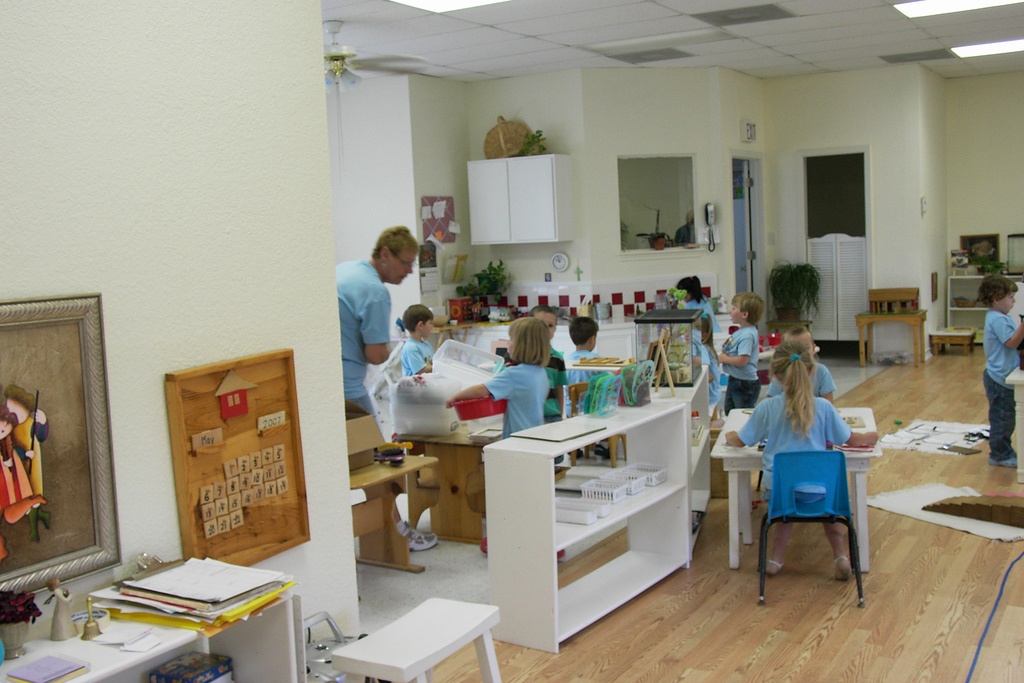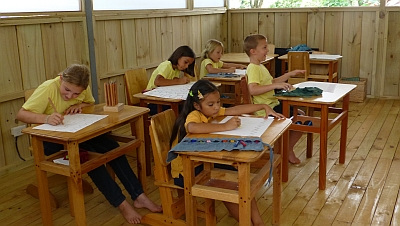
The year is 1990. Romania has been a republic for less than twelve months. A group of teachers and parents in Cluj-Napoca, working from a German-language Waldorf pedagogy manual and correspondence with the Bund der Freien Waldorfschulen, opens what becomes the first documented Waldorf class in Romania. Within a decade, similar groups form in Bucharest, Sibiu, Timișoara, and Brașov.
That origin story — parent initiative, imported training materials, and rapid local adaptation — has defined the Romanian Waldorf network ever since. This article documents what that network looks like today, how teacher preparation operates, and what the Waldorf curriculum actually contains when observed in Romanian schools.
The Legislative Foundation
Romanian education law classifies Waldorf as an officially recognised alternative educational framework. This status, formalised through ministerial orders in the 1990s and consolidated under the 2011 National Education Law, means that Waldorf schools and sections operating under Romanian accreditation issue state-recognised diplomas. Students completing twelve years of Waldorf schooling in Romania sit the same baccalaureate examination as their peers in standard state schools.
The recognition comes with curriculum constraints. Waldorf schools in Romania are required to cover the competencies defined in national curriculum frameworks, but are permitted to sequence and present that material through Waldorf methods — the main lesson block structure, the arts integration, and the absence of graded textbooks in lower grades. Inspection reports from the National Centre for Alternative Education document how schools demonstrate curriculum equivalence without abandoning pedagogical form.
The Federation of Waldorf Schools in Romania
The national coordinating body, the Federation of Waldorf Schools in Romania (Federația Waldorf din România), maintains membership records, coordinates teacher professional development, and liaises with the International Association of Steiner/Waldorf Schools in Europe (IASWECE) and the Pedagogical Section of the Goetheanum in Dornach, Switzerland. Published federation documentation from 2023 lists member schools and active Waldorf classes across fourteen Romanian cities.
The federation also manages the national Waldorf teacher seminar, a multi-year post-graduate program based primarily in Cluj-Napoca that combines pedagogical method courses with a substantial arts component — watercolor painting, speech formation, eurythmy — reflecting the Waldorf view that artistic development in the teacher is inseparable from pedagogical quality.
Curriculum Structure: Main Lessons and Epoch Blocks
The most visible structural difference between a Waldorf class and a standard Romanian classroom is the absence of a forty-five-minute period timetable in the morning hours. Instead, the Waldorf day opens with a two-hour main lesson that runs for three to six weeks on a single subject — called an "epoch" or "Hauptunterricht." During an epoch on Roman history, for instance, all arts integration, reading, writing, and discussion in the main lesson block is oriented toward that subject. The epoch then gives way to the next topic, which is visited again in a later school year at greater depth.
This spiral approach means that Romanian Waldorf students encounter geography, history, botany, zoology, physics, and chemistry in age-specific narrative framings before engaging with them analytically. The first physics epoch, typically in Class 6, deals with optics, acoustics, and warmth through observation and description — no formulas, no numerical calculations. Algebraic and mathematical formalisation arrives in Class 7 and 8.
The Main Lesson Book
Because Waldorf students in lower and middle grades do not use standard textbooks, the primary written record of their learning is the main lesson book — a blank-page notebook in which each student records the epoch content through writing, drawing, and watercolor or crayon work. These books, which accumulate over twelve years, serve both as personal learning records and as the primary assessment artefact reviewed during school inspections.
Romanian inspection frameworks accommodate this artefact. Inspectors visiting Waldorf schools are trained to evaluate main lesson books as portfolio evidence of curriculum coverage, rather than comparing them against textbook page completion as they would in a standard school.
Arts Integration in the Romanian Context
Waldorf pedagogy assigns arts subjects a role equal in standing to academic disciplines. Eurythmy, a movement art developed by Rudolf Steiner that sets language and music into visible motion, is taught in every Waldorf grade from Class 1 through Class 12. Watercolor painting in the wet-on-wet technique is part of the early curriculum, giving way to more technically demanding approaches in the upper school. Handwork — knitting, crocheting, sewing, woodworking — progresses through a documented sequence of increasing complexity.
In Romanian Waldorf schools, seasonal festivals add a cultural dimension to this artistic calendar. The Michaelmas festival in late September, the Advent spiral in December, and the St. John's fire in June are documented in school reports as pedagogically intentional rather than decorative. They provide rhythm to the school year — a key concept in Waldorf developmental theory — and involve parents and the wider school community.
Teacher Preparation and the Seminar Model
Romanian Waldorf teacher training does not follow the standard university-based education degree pathway. Instead, it operates through the Waldorf Pedagogical Seminar, a post-graduate course that accepts candidates with an existing teaching qualification or university degree and leads them through a multi-year curriculum combining Waldorf methodology, child development theory, and intensive artistic work.
Graduates of the seminar are recognised for Waldorf teaching positions within member schools of the federation. They are also subject to the standard Romanian teacher certification requirements — certification through the national inspector corps — which the federation negotiates with the Ministry of Education on behalf of its members.
The seminar curriculum includes study of Rudolf Steiner's foundational texts, particularly "The Education of the Child," "Discussions with Teachers," and the lecture cycles collected as "The Renewal of Education." These texts are available in Romanian translation and form part of the reading list for seminar participants.
Geographic Distribution and Access
Waldorf in Romania remains predominantly an urban phenomenon, concentrated in the cities where the federation's founding schools established themselves in the 1990s. Cluj-Napoca has the largest documented Waldorf presence, with multiple classes running across grade levels and a functioning high school completing the twelve-year arc. Bucharest, Sibiu, and Timișoara each have documented Waldorf sections within larger school structures.
Access in smaller towns or rural areas is not systematically documented in federation records, and the absence of trained Waldorf educators outside major cities creates a structural barrier. The seminar model requires in-person attendance, which limits the pool of candidates who can complete training while remaining in small communities.
External references: The Waldorf Resources archive provides curriculum documentation. The Goetheanum in Dornach, Switzerland maintains the international Waldorf research archive.